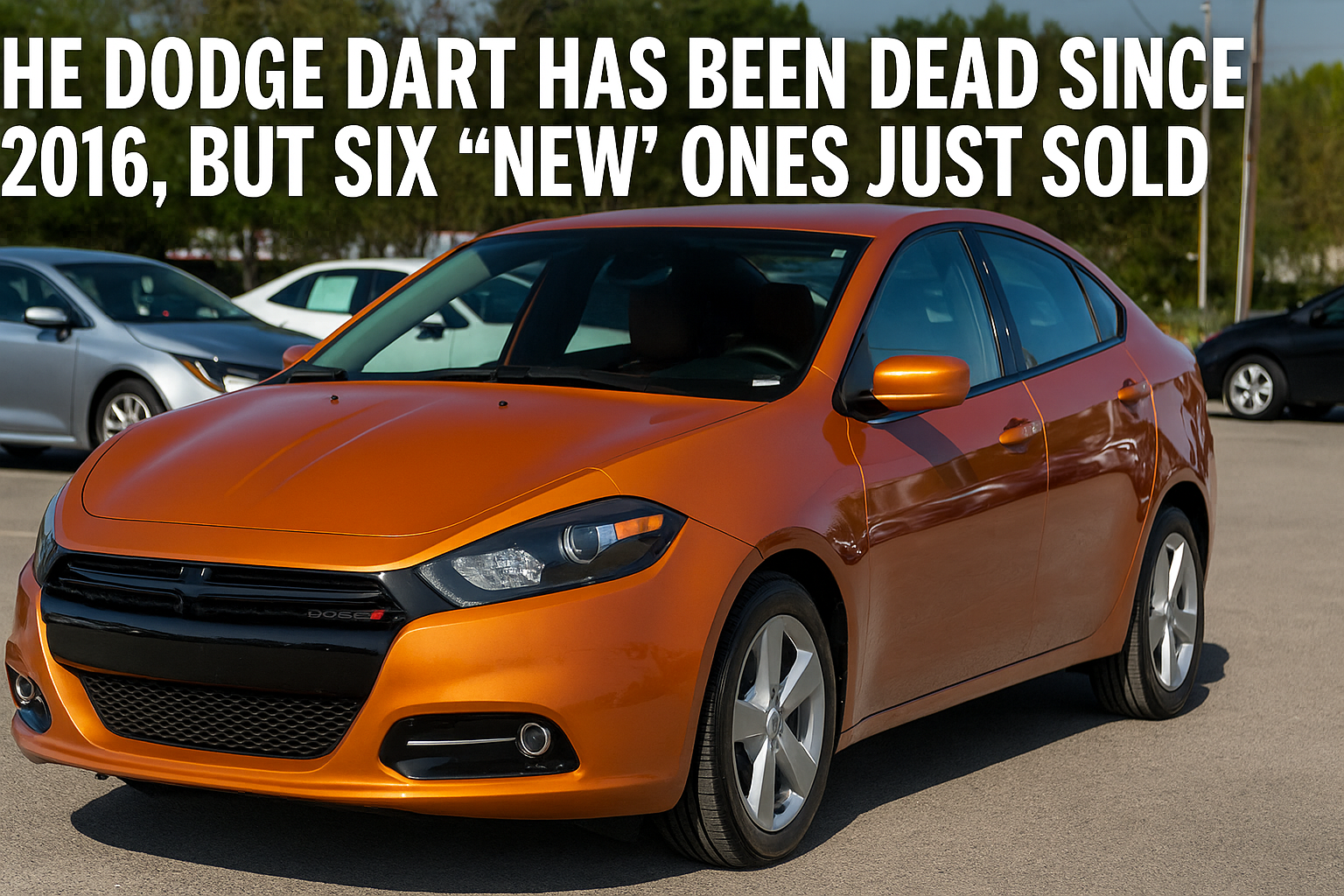
Every quarter, automakers release their sales numbers, breaking down which vehicles moved from showroom floors and dealer lots. Usually, the reports contain the expected – popular SUVs, trucks, and current-generation sedans. But sometimes, hidden in the data, you’ll find something unusual. This time, the surprise comes from Stellantis, the parent company of Dodge, Jeep, Chrysler, and Fiat, which recently reported selling six brand-new Dodge Darts in its third-quarter sales results.
This wouldn’t be shocking if the Dart were still in production—but it hasn’t been built since 2016. That’s right: nearly a decade after Dodge pulled the plug on its compact sedan, six “new” examples were sold to buyers in 2025.
So how is this possible? And what does this say about the automotive market, dealerships, and consumer behavior? Let’s break it down.
What Was the Dodge Dart?
To understand the significance, we need to revisit what the Dodge Dart was and why it was discontinued.
- Production Years: 2013–2016 (modern version)
- Built In: Belvidere, Illinois
- Platform: Based on an Alfa Romeo compact platform
- Engines: Range of four-cylinder engines, including a 2.0L, 2.4L, and a 1.4L turbocharged motor
- Price When New: Around $20,000 at launch
The Dart nameplate itself had a legacy that stretched back to the 1960s and 1970s, when earlier models were known for their muscle-car appeal and even offered V-8 power. The modern Dart, however, entered the compact sedan segment to compete with models like the Honda Civic, Toyota Corolla, and Hyundai Elantra.
Despite some initial attention, the Dart struggled to capture a strong foothold in the market. Sales never matched expectations, and with consumer preference shifting toward crossovers and SUVs, Dodge discontinued the model in 2016.
How Did Six Dodge Darts Sell in 2025?
At first glance, it seems almost impossible. How could cars built eight or more years ago be counted as new sales in 2025?
The answer lies in how dealerships handle unsold inventory:
- Leftover Dealer Stock: Cars that remain unsold after their model year can sit on dealer lots for years. If they’ve never been titled or registered, they are legally considered “new.”
- Specialty Dealers: Some dealerships keep older models in storage, waiting for a future buyer or collector who wants something unique.
- Deep Discounts: An eight-year-old “new” car likely sold at a steep discount. For bargain hunters, this can be an attractive deal, especially if they’re loyal to the Dodge brand.
So, the six Darts reported in the third-quarter sales were most likely unsold vehicles that had been sitting quietly in dealer inventory, finally finding buyers after years of collecting dust.
Zombie Cars – The Dart Isn’t Alone
The Dodge Dart isn’t the only “zombie car” to appear in Stellantis’ latest sales report. Several other discontinued models also resurfaced:
- Dodge Grand Caravan – 8 units sold (discontinued in 2020)
- Dodge Journey – 13 units sold (discontinued in 2020)
- Fiat 500L – 2 units sold (discontinued in 2020)
- Chrysler 300 – 71 units sold (discontinued in 2023)
- Fiat 500X – 31 units sold (recently discontinued)
The fact that all of these vehicles were sold years after being discontinued demonstrates that dealerships sometimes retain older, brand-new models and release them much later to customers.
Why Do People Buy Discontinued Cars?
You might wonder why someone would purchase a car discontinued nearly a decade ago. There are a few possible reasons:
- Price Discounts: A brand-new Dodge Dart from 2016, even sold in 2025, may be priced far below current compact sedans. For buyers on a budget, that’s a tempting option.
- Brand Loyalty: Some people are lifelong Dodge fans. The opportunity to buy a “new” Dart might have felt like a once-in-a-lifetime chance.
- Collector Appeal: While the Dart wasn’t a sales success, rare late-sold units could become collectibles in the future.
- Practicality: Not everyone needs the latest technology or design. For some, a simple, affordable compact car with low mileage is enough.
The Curious Case of Dealer Inventory
It’s worth noting that cars sitting unsold for years pose unique challenges:
- Battery & Fluid Degradation: Cars left idle too long can suffer from weak batteries, stale fuel, and worn seals.
- Outdated Features: A 2016 Dodge Dart doesn’t come with modern tech like advanced driver-assistance systems, larger touchscreens, or connected features that buyers now expect.
- Warranty Considerations: A factory warranty usually begins at the time of first sale, meaning a “new” Dart sold in 2025 might still carry coverage, despite being built nearly a decade ago.
This raises questions about the true value of such purchases.
What This Means for the Market
The case of the Dodge Dart highlights interesting realities in the auto industry:
- Shift to SUVs: The Dart’s failure underscores the declining market for compact sedans as consumers flock to SUVs and crossovers.
- Stellantis Inventory Practices: Selling discontinued vehicles years later suggests Stellantis and its dealerships may be sitting on more dormant inventory.
- Buyer Psychology: Consumers are sometimes more motivated by deals and discounts than the newest features.
It also raises the question: are automakers missing an opportunity by not capitalizing on nostalgia or retro-inspired compact cars in today’s SUV-heavy market?
Pros & Cons of Buying a “Zombie Car”
Pros
- Potential for huge discounts compared to modern cars
- “New” title despite being discontinued years ago
- Low (or zero) mileage at purchase
- Collector potential in the future
Cons
- Outdated technology and safety features
- Possible mechanical issues from long-term storage
- Limited resale value compared to modern models
- Discontinued models may have limited parts and service availability
Conclusion
The story of the six Dodge Darts sold in 2025 serves as a fascinating reminder that the auto industry has its quirks. While the Dart officially ended production in 2016, a handful of unsold units lingered in dealer inventories for years, eventually finding new owners nearly a decade later.
Alongside the Dart, other “zombie cars” like the Grand Caravan, Journey, and Fiat 500L prove that discontinued doesn’t always mean gone forever—at least not immediately. For buyers, these vehicles represent bargains, nostalgia, or unique finds. For the industry, they highlight how deeply inventory management and shifting consumer demand shape what’s on the road.
So while the Dodge Dart may be long dead in the eyes of automakers, it still has a curious afterlife—rolling out of dealerships years after its official burial.