The global shift toward sustainable mobility continues to accelerate, and automakers are preparing their next wave of electric vehicles (EVs) to meet growing demand. Suzuki has now stepped firmly into this future with the reveal of the Vision e-Sky BEV concept, a compact all-electric hatchback that blends futuristic design with everyday practicality. Unveiled ahead of the Japan Mobility Show 2025, this concept previews Suzuki’s next-generation design language and its commitment to electrification.
The Vision e-Sky isn’t just a showpiece; it is an early look at a production-ready EV expected to launch globally in FY2026. Importantly, this EV could be localized for India, likely entering the market as a cost-effective Maruti-branded electric hatchback. With rising EV adoption and government incentives, this model has the potential to redefine the entry-level EV space.
Exterior Design: Compact Yet Futuristic
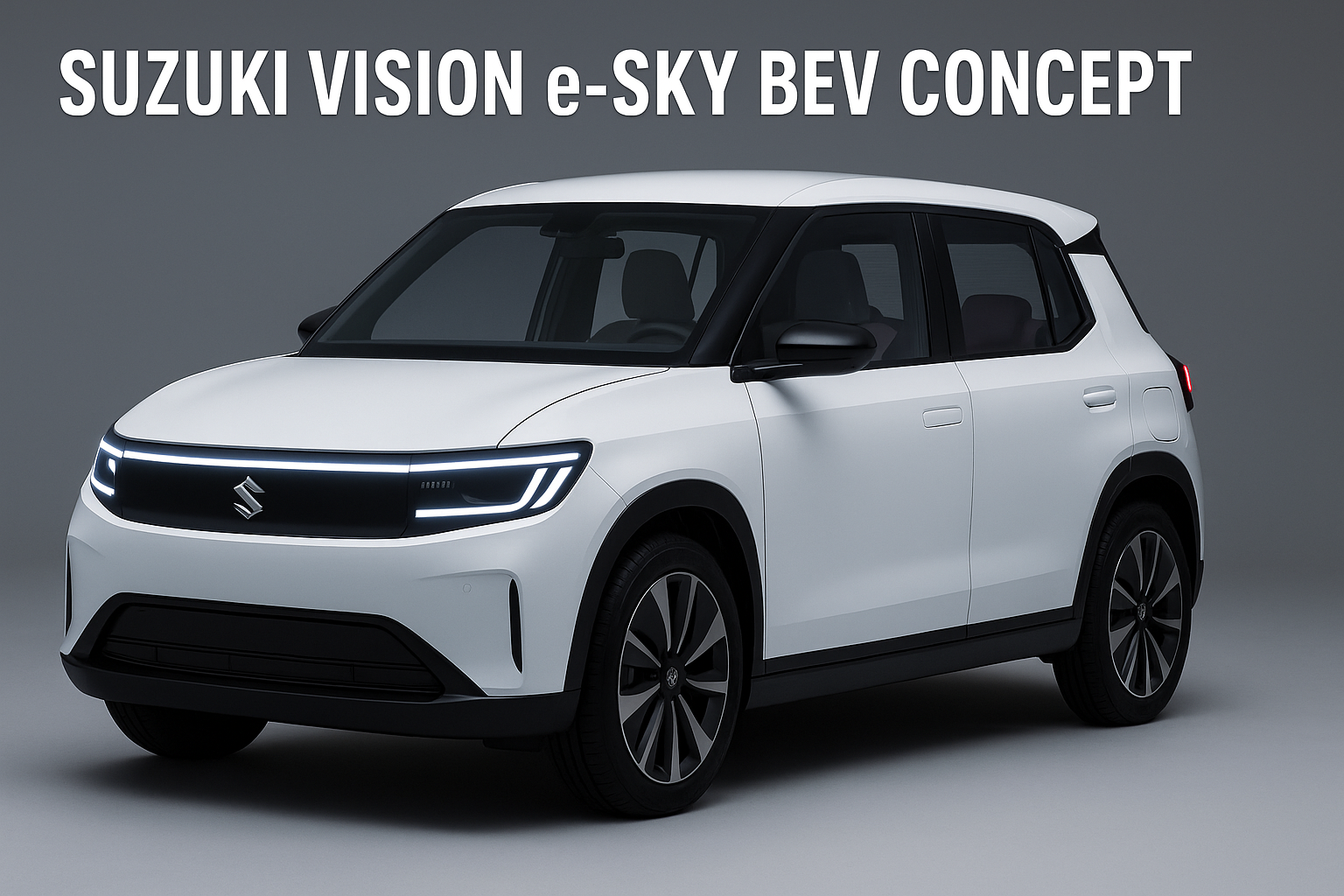
The Suzuki Vision e-Sky BEV embodies the brand’s new “Unique, Smart, Positive” design philosophy. Suzuki has made clear that the future of its design language will emphasize compact dimensions paired with a modern, tech-forward identity.
- LED Lighting Signature: At the front, a bold multi-array LED light bar stretches across the fascia. This element immediately establishes the EV’s futuristic intent. Flanking the light bar are the primary headlamps integrated with C-shaped daytime running lights (DRLs), giving the hatchback a sharp, confident face.
- Floating C-Pillar: One of the most distinctive touches is the chunky, floating C-pillar. This design not only breaks visual monotony but also lends the compact EV a youthful and sporty vibe.
- Aerodynamic Detailing: Features such as flush door handles, sleek wing mirrors, and an integrated roof spoiler with LED brake light enhance aerodynamics while improving efficiency.
- Two-Tone Theme: The concept showcases a stylish dual-tone exterior, with a contrasting white roof and blacked-out pillars. Subtly flared wheel arches house aerodynamic alloy wheels that add to the car’s futuristic appeal.
- Compact Footprint: Measuring 3,395mm in length, 1,475mm in width, and 1,625mm in height, the Vision e-Sky is taller than the current S-Presso but shorter and narrower. This upright stance with short overhangs ensures maximum use of interior space while keeping the car city-friendly.
Interior: Technology Meets Practicality
Suzuki has ensured the cabin of the Vision e-Sky reflects the modern aspirations of urban EV buyers. The design focuses on creating a high-tech, premium yet functional atmosphere.
- Steering Wheel: A unique squircle-shaped steering wheel with integrated multifunction buttons sits at the heart of the driver’s zone. Gloss-black inserts give it a refined finish.
- Dual Digital Displays: The driver gets a crisp digital instrument cluster that shows real-time EV data such as range, battery charge, speed, and lighting status. A secondary screen caters to infotainment and navigation.
- Floating Dashboard: The dashboard has a futuristic floating design that integrates well with the wraparound cabin layout. Ambient LED strips run across the cabin, creating a lounge-like atmosphere.
- Drive Selector Placement: The gear selector is located just below the dashboard, making the shift between P, R, N, and D smooth and intuitive.
- Premium Cabin Colors: A mix of blue and purple shades dominates the interior, while beige inserts on the seat bases and armrests add warmth. The split-design front seats with distinct upper halves deliver a chic, premium feel.
Practicality and Space
While compact on the outside, the Vision e-Sky has been designed to maximize interior space. The upright stance, flat nose, and vertical tail ensure that the cabin feels roomy. Short front and rear overhangs further free up space for passengers.
Though official boot capacity numbers are not revealed, Suzuki’s focus on efficient packaging suggests the e-Sky will offer enough cargo space for city and weekend needs.
Powertrain and Range
Technical details remain limited, as Suzuki is keeping final specifications under wraps until closer to launch. However, it has confirmed an important figure:
- Range: The Vision e-Sky promises a maximum driving range of over 270 km on a single charge.
This figure positions it as a practical city EV with occasional highway usability—well suited for markets like India where affordable EVs must balance cost with usable range.
Global Launch Plans
The production version of the Suzuki Vision e-Sky is slated for launch in FY2026. While the global rollout will likely begin in Japan, Suzuki has made it clear that emerging markets like India are central to its electrification roadmap.
For India, a localized Maruti electric hatchback based on the K-EV platform is strongly expected between 2026–2027. Local production and supply chain optimization will help keep costs competitive. This could make it one of the most affordable EVs in India, rivaling upcoming entry-level electric hatchbacks from Tata and Hyundai.
Market Relevance in India
India’s EV market is still at a relatively early stage but is growing rapidly. The Vision e-Sky, if localized under Maruti branding, could address multiple factors:
- Affordability: Maruti has traditionally dominated the entry-level car segment in India. By localizing battery production and component sourcing, the e-Sky could be positioned as India’s most affordable city EV.
- Urban Practicality: With compact dimensions and easy maneuverability, the Vision e-Sky is tailor-made for congested city roads.
- Range and Charging: A 270 km range will be sufficient for urban users who primarily travel 30–50 km daily. Coupled with expanding EV charging infrastructure, the model could become a practical first EV for Indian households.
- Design Aspirations: The futuristic design, premium cabin, and modern features would appeal to young, first-time EV buyers seeking style along with substance.
Challenges Ahead
While the concept is impressive, there are challenges Suzuki must address before production:
- Charging Infrastructure: In markets like India, fast-charging infrastructure remains limited, though it is expanding steadily.
- Pricing Pressure: Tata Motors has set strong benchmarks with EVs like the Tiago EV and Punch EV. Maruti’s pricing strategy will need to undercut or at least match these rivals.
- Localization: Success depends on how quickly Suzuki can localize critical EV components such as battery packs, motors, and software systems.
Conclusion
The Suzuki Vision e-Sky BEV concept represents an exciting glimpse into Suzuki’s electric future. Compact yet stylish, practical yet futuristic, this EV has the potential to democratize electric mobility in global markets, including India.
With its bold design, 270+ km range, and production target of FY2026, the Vision e-Sky is more than just a concept—it’s a promise of a new era where affordable, premium-looking EVs become accessible to millions. For India, where Maruti remains the dominant player in small cars, the Vision e-Sky could be a turning point, making EV ownership both aspirational and achievable.