After years of anticipation, Tata is resurrecting one of its most iconic SUV nameplates. The new Tata Sierra is slated for launch in November 2025, and it arrives with modern features, multiple power-train options and a style that nods to its heritage. Here are the five key things you should know before you consider booking.
1. Expected Pricing & Positioning
The new Sierra is expected to be priced in the ballpark of ₹ 11 lakh onwards (ex-showroom, India), though for full premium trims the pricing may cross into the ₹ 20-lakh range. This positioning would slot it between models like the smaller Tata Curvv and the larger Harrier in the brand’s SUV line-up
With such pricing, the Sierra will sit directly in the midsize SUV segment in India and aim squarely at competitors like the Hyundai Creta, Maruti Grand Vitara, Kia Seltos and others. The value proposition here is significant: you’re getting modern tech + SUV appeal + the emotional pull of the Sierra nameplate — all in a segment where many buyers choose “safe bets”.
2. Powertrain Options & Launch Strategy
One of the strong features of the incoming Sierra is its flexibility in power-train offerings. Reports suggest the ICE (internal combustion engine) version will offer a 1.5-litre turbo petrol and/or possibly a 1.5-litre diesel engine as well.Some sources suggest even a 1.2 L turbo petrol as a lower variant.
In parallel, an EV (electric vehicle) version is also expected, likely to precede or closely follow the ICE model. The EV is expected to be built on Tata’s Gen2 EV-platform and may deliver ranges of up to ~420-500 km depending on battery pack.
By offering both ICE and EV under the same nameplate, Tata ensures the Sierra caters to both traditional petrol/diesel buyers and early EV adopters. This dual strategy could well give the Sierra a broad appeal.
3. Design & Feature Highlights
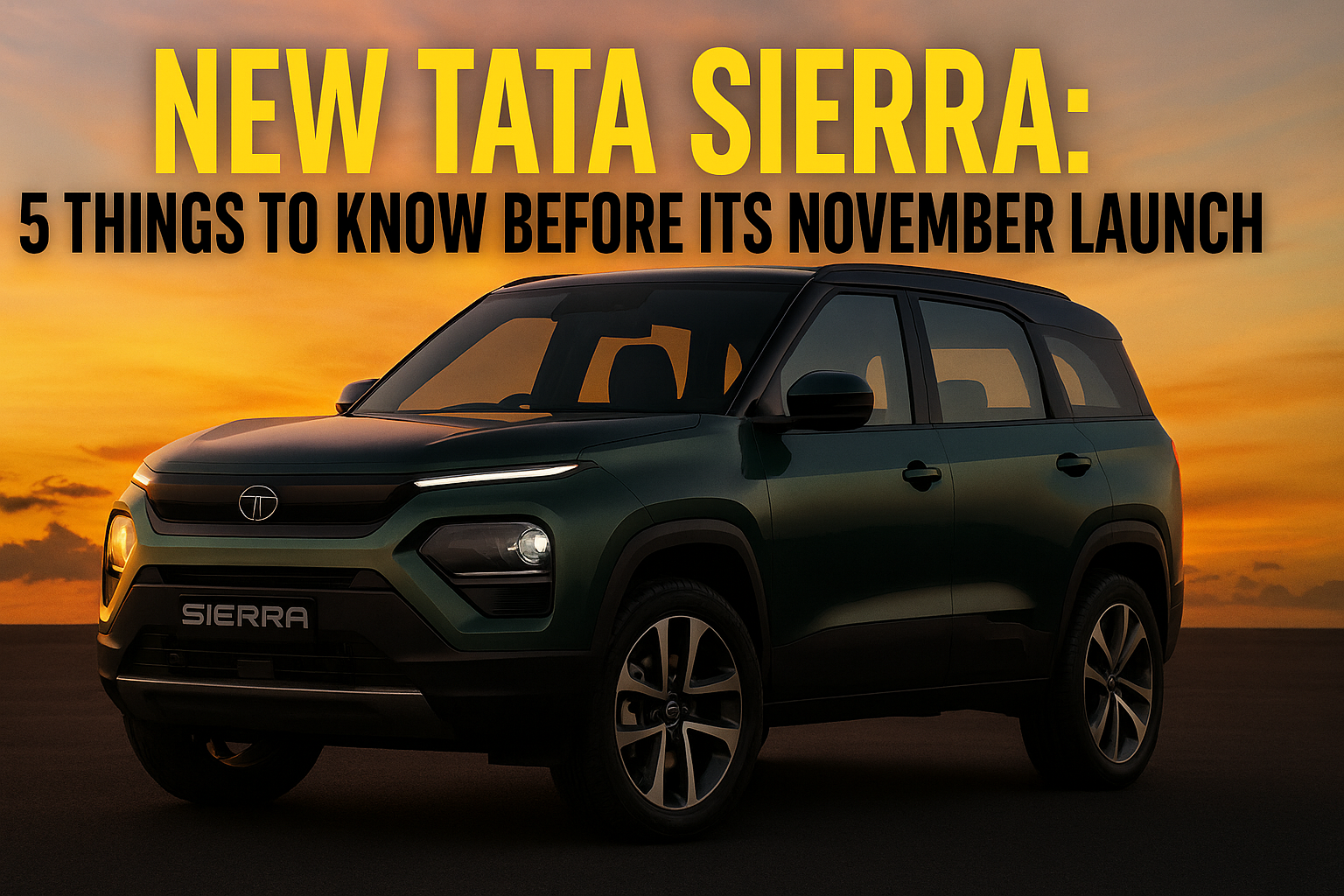
The new Sierra channels the spirit of the original “curved-over rear side windows” model, but with thoroughly modern execution. Its design updates include:
- Larger 19-inch alloy wheels (instead of smaller R15-type tyres on earlier models) for stronger road presence.
- A sharper roofline, shorter front/rear overhangs and upright slab-sided styling. A premium interior: triple-screen setup (digital instrument cluster + central infotainment + passenger-side screen), dual-tone dashboard, panoramic sunroof, ventilated front seats, ambient lighting and more.
Safety and driver aids will be generous: expect 6 airbags, 360-degree camera, ESC (Electronic Stability Control), and Level-2 ADAS (Advanced Driver Assistance Systems) In short: the Sierra blends nostalgia with premium tech and a standout style — ensuring it doesn’t feel like just another mid-SUV.
4. Size, Segment Fit & Rivals
In terms of dimensions, the Sierra is expected to measure around 4.3 metres in length, making it compact enough for urban use yet roomy enough for comfortable five-seater SUV duties. It will compete in the crowded midsize SUV arena, going up against models like:
- Hyundai Creta
- Maruti Grand Vitara
- Kia Seltos
- Volkswagen Taigun / Skoda Kushaq
- Toyota Hyryder & Honda Elevate
The advantage for Sierra: fewer compromises on features for the price, a distinctive design and the option of EV in future. For buyers who want something a bit different in the segment, the Sierra could stand out.
5. What to Watch & Buyer Tips
While there’s much to like, here are key things to keep in mind:
- Seat height, ride comfort & practicality: With 19″ wheels and premium features, ride quality (especially on Indian roads) will matter. Ensure test‐drives focus on comfort over long runs.
- After-sales / service network: While Tata Motors has a strong network, premium-feature SUVs often come with higher servicing/spares cost. Consider ownership costs.
- EV version timing & real-world range: If you’re waiting for the EV version, check actual range and charging infrastructure. Spec claims don’t always match conditions in India.
- Resale value & market positioning: New nameplates often face unknowns in resale value. But with Sierra’s heritage, that risk may be lower.
- Variants & feature differentiation: With the Sierra offering multiple trims, make sure you compare features vs price — sometimes the jump to the better variant gives significantly more value.
In essence: If you buy the Sierra, aim for a variant that balances your needs (daily commute + weekend drives) and ensures you don’t compromise on comfort or tech just to save a little.
Final Verdict
The new Tata Sierra presents one of the most compelling options in its segment today — combining heritage design cues, premium features, modern power-train flexibility (including EV), and a strong value proposition. For buyers wanting a midsize SUV that stands out from the crowd, gives you tech and style without going into premium luxury-SUV budgets, the Sierra could well be a “smart purchase”.
If pricing remains competitive (starting around ₹ 11 lakh) and execution is on point (ride comfort, after-sales, feature quality), this could easily become one of the segment’s favourites.
For those who like to wait: keep an eye on the EV version specifications (real-world range, charging cost) as well as what the top variants deliver vs rivals.